November 14, 2018
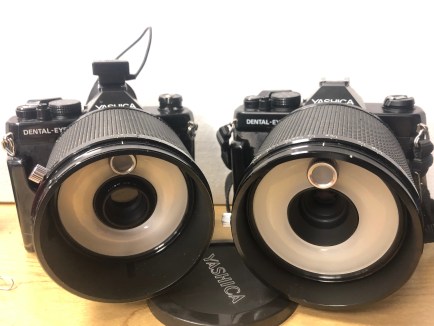
Macro photography is a type of photography that involves getting very close to photography very small subjects. Typical uses of macro photography are photographing insects, teeth (for dentistry), chemical reactions, and circuits. The image below shows two Dental-Eye macro cameras we have in our classroom. Dentists used to use these to take extreme close-up images of teeth.
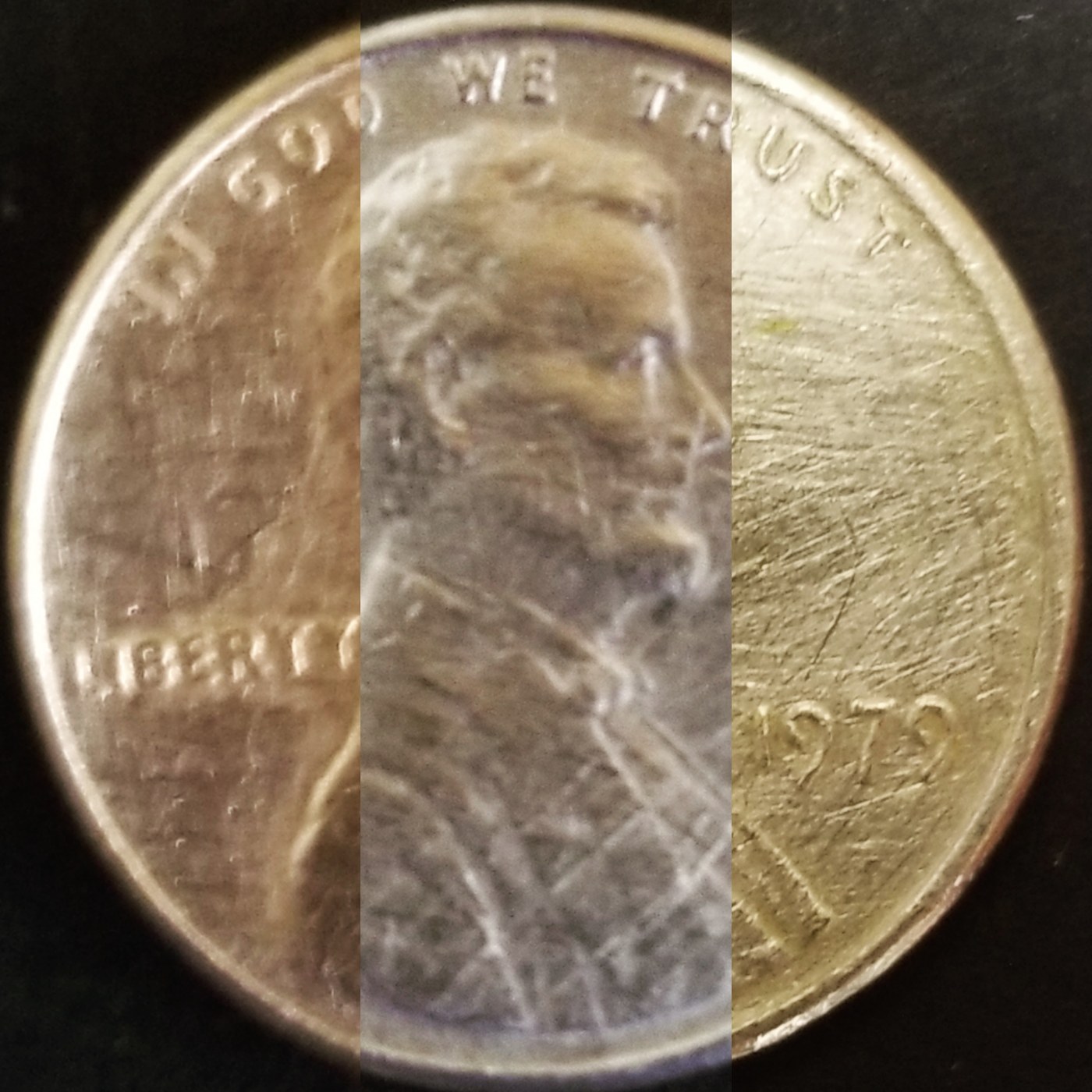
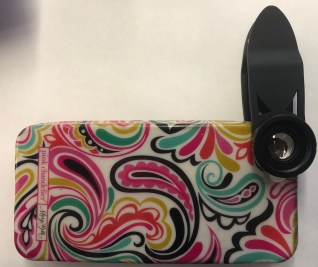
To introduce the students to macro photography, we had the students use their cell phone cameras with a macro attachment to photograph pennies. The image below shows the macro attachment the students used with their phone. The image on the lower left was taken by a cell phone without the macro attachment. If the phone camera had been moved any closer to the penny, the image would be blurry. The image on the right was taken with the macro attachment. You can get much closer with the macro attachment, notice the the initials “LS” underneath the banner. We also introduced the concept of depth of field to the students. Depth of field is the area in front of and behind the subject that remains in focus. Images in which only the objects immediately in front of and behind the image are in focus are said to have a narrow depth of field. In macro photography, the depth of field is very narrow. You can see this effect in the picture to the left below that was taken with the macro attachment. As you move further away from the “LS” the image loses focus.


In order to make photographing pennies interesting, our students used a series of chemical reactions first, to zinc coat the penny making it silver colored, and then second, to form the alloy brass on the surface of the penny turning it gold colored. We discussed chemical reactions and alloys with our students and discussed the differences between an interstitial alloy and a substitutional alloy. Brass is a substitutional alloy that forms when zinc atoms mix with copper atoms on the surface of the penny.
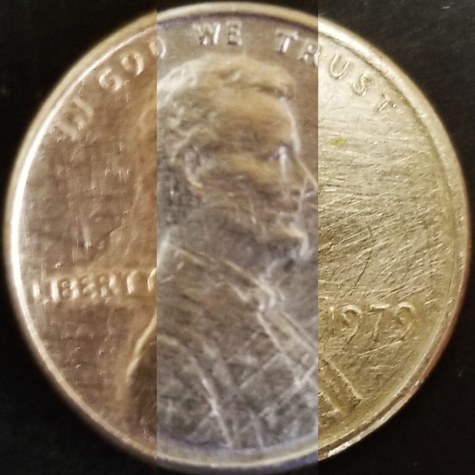
Students took a macro image of the penny at each stage of the process: after cleaning, after coating it with zinc (silver color), and after mixing the copper and the zinc (gold color). Then, they used the App PicsArt to create a collage of the three images. Because the depth of field is so narrow in a macro photograph, and because this was our students first experience with macro photography, some of the images in their collage were blurry. But this was a good introduction and prepared them for our next unit on polarized light macro photography. The following image is an example of one of the students collages.
 Experimental Photography MHS
Leave a comment