Caffenol Film Developing – B&W/Color

October 31, 2018

The caffenol unit began with the class learning about Single Lens Reflex cameras, the film they use, how the film works/the chemistry behind it, and the equipment necessary to develop film. We created latent images by exposing both black and white 35mm film and color film in Cannon Rebel 2K cameras. Once our latent images were captured onto the emulsion, our students the learned to process the film using caffenol. Instant coffee was mixed with distilled water, and adding sodium carbonate, Vitamin C (ascorbic acid) and potassium bromide.

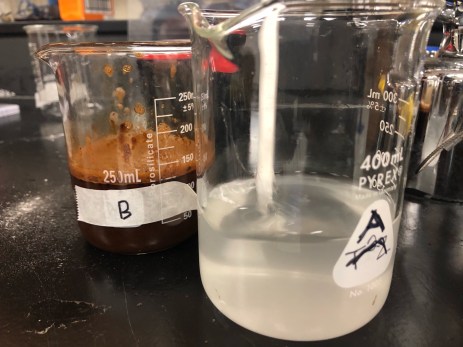
The developer was made by making two solutions, A and B, and mixing them together and pouring the resulting solution into the developing tank. Solution A was made by dissolving 17.5 grams of sodium carbonate in 150-mL of distilled water. Solution B was made by dissolving 25.0 grams of instant coffee, 5.0 grams of Vitamin C, and 0.5 grams of potassium bromide in 100-mL of distilled water.
Caffenol_solutions

Once the developer was made, our students put the film into developing tanks and developed them! They started by soaking the color film in water for 5-8 minutes. This process softens the emulsion, and removes the color dye. Next they agitated the film in the caffenol developer for 12-15 minutes. Then, they took the film from the developer and placed it into a stop bath of constant agitation, repeatedly inverting the tank for a minute. This stops the developing process. Then, they took the film out of the stop and placed into the fix. This process will remove the excess silver from the film. The last process is to agitate in photo flow 30 sec-1 minute.

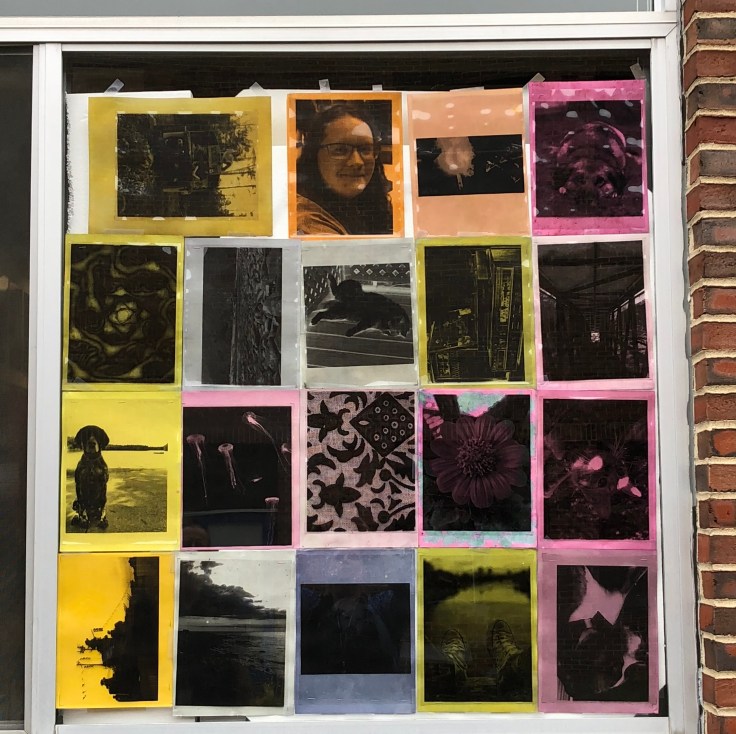
Next, our students created two enlargements of their favorite negative. They did this by using an apparatus cleverly named an enlarger, that simply projects light through a piece of film thus printing the image onto a piece of photographic paper. One of the prints was developed using traditional Dektol developer, and one print was developed with caffenol. Each print was soaked in the appropriate developer. Developer is a basic solution that causes the silver metal atoms in the latent image to reduce the silver ions around them, to more silver metal atoms. It takes about 90 seconds for the silver atoms to reach a high enough concentration to be seen with the eye. At this point the image is now visible on the paper. After developer, our students soaked each paper in what’s called the stop. Stop is an acidic solution that neutralizes the basic developer. This reaction stopped the developer from interacting with the latent image, essentially ensuring the picture isn’t too dark. Finally, the paper was soaked in the fix to get rid of any light sensitive silver ions left on the paper, thus making it light safe. The Dektol print is on the left and the caffenol print is on the right in the images below. 

The caffenol process was very successful for our students. Both the film and the enlargement of the film came out well. The color film was difficult to develop, as the film had to soak in water for a very long time before in order to get the excess ink out of the film. If this was done incorrectly, the image came out smudged and difficult to see. The black and white film developed especially well, and some students even said it came out better than the normal Dektol developer. Developing the photographic paper enlargements was very interesting. When the paper was developed it, came out slightly faded and rustic, with a yellow-brownish tint. 
Anthotypes

October 17, 2018

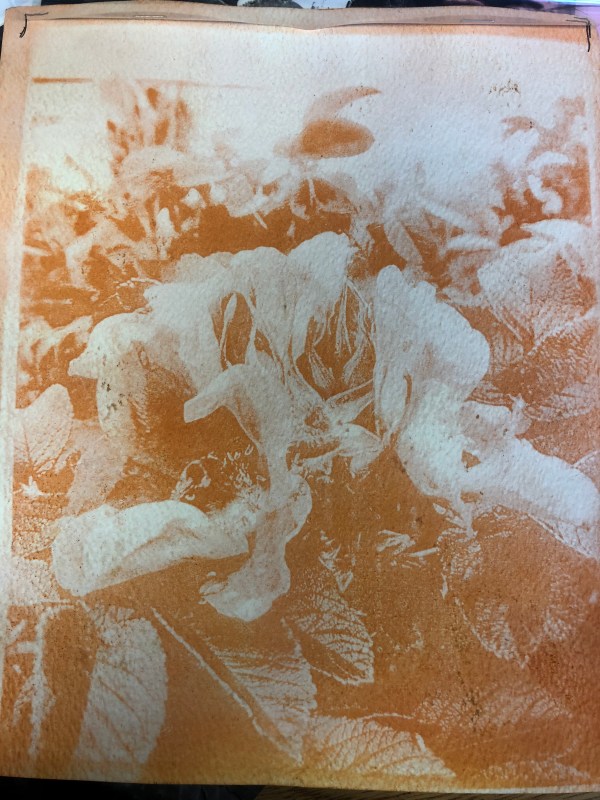
The anthotype process, developed in the 1840’s by John Herschel, involves making photographic prints using natural plan pigments. In this printing out process, a negative is placed over a sheet of watercolor paper that has been painted with a natural dye from a fruit, spice, or vegetable. The anthotype is placed in the sun, and the ultraviolet light from the sun breaks the double bonds in the pigment causing it to fade everywhere the negative is clear. The black portions of the negative will block the UV light and the dye will remain unfaded under those parts. This creates a monochromatic image of the subject. Since natural dyes are inherently unstable, these images fade slowly over time in light when they are displayed.

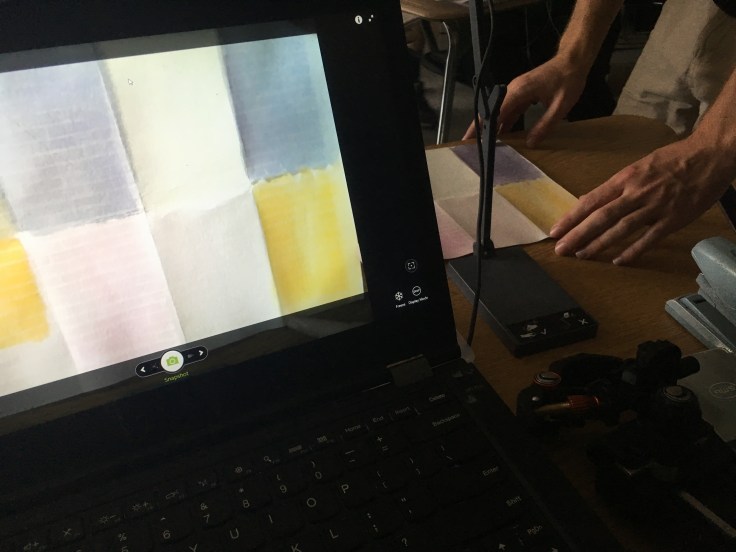
Our students brought in a number of different plants, vegetables, fruits, and spices to test. They extracted the dyes using alcohol, water, or a mixture of both alcohol and water. These solutions were then painted in one of the eight squares on their test sheet. A negative of a brick wall was placed over the test paper and the paper was hung in the window. Over a period of five days, students recorded the UV readings using a UV meter and checked their print for fading.

Once the initial test was completed, the students chose a dye to work with, extracted it, painted it on an paper, created a digital negative, and set the anthotype up outside to start the fading process. Their initial results were good, but many of the prints lacked contrast because to little dye was used on the sheet.

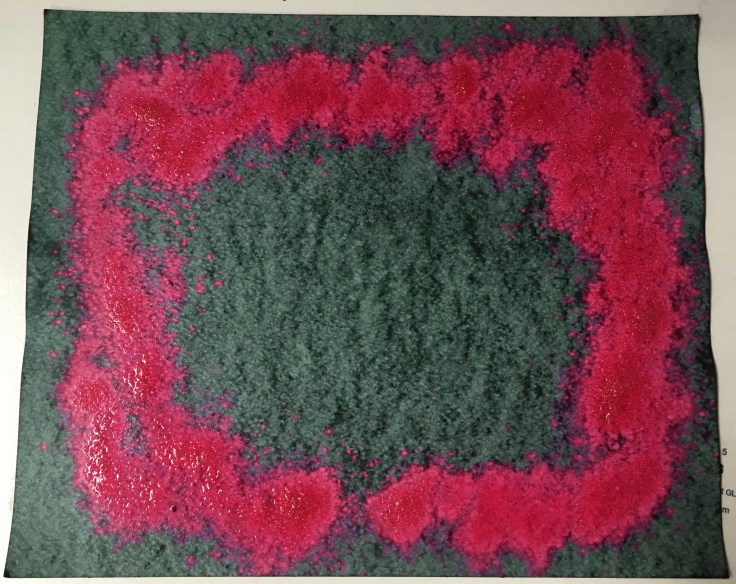
Students were given another opportunity to create a “final” anthotype. Many students chose to adjust the pH of their dyes to change the color. One student, reduced the volume of her extract by heating it, to increase the dye concentration. Another student used a combination of different dyes. Finally, a third student developed a method of applying acid and base crystals to the paper to create interesting texture and color combinations.

We are currently awaiting the printing out of the students final anthotypes, but we have been hindered by the cloudy weather.

img_4848.jpg

Anthotypes

October 3rd, 2018

The past two weeks our students have been working on anthotypes. Anthotypes are photographic images made using plant dyes. A negative is placed over paper painted with a natural dye and is set in the sun to fade. After a number of hours, the image appears on the paper. This type of photographic print was one of the first print process used. Unfortunately, because the dyes are not UV stabilized, the images will gradually fade until they disappear forever.

After learning about solubility, molecular polarity, conjugated double bonds, color, and fading, our students started to extract dyes from plant materials. The plant material was ground up using a mortar and pestle and the dyes were extracted using water and ethanol. The mixtures were then filtered.

Each group extracted dye from six different pigments. The dyes were painted onto water color paper and and allowed to dry. Students also experimented with mixing different dyes and painted them on the paper to test as well. Finally, students extracted plant pigments from fall leaves they collected around the campus.

A test negative of a brick wall was used to test how effectively the dyes faded in the sunlight.

The students repeated the process with a number of synthetic dyes. They also learned that they could could change the color of some natural and synthetic dyes by adjusting the pH of the solution. The students experimented with changing the colors by adding either citric acid to make the solution more acidic or sodium carbonate to make the solution more basic.img_7174.jpg

The test pages were taped in the window to expose them to sunlight.  Each and every day the UV reading level and weather conditions were recorded in their idea notebooks.

Once the tests were completed each group of students presented their results to the class. They discussed what went well, what did not go well, and what they would change in the future.IMG_6972

After the presentations, the students picked a natural dye and a synthetic dye with which they would use to make their final prints. Once the dyes were selected, they painted them onto pieces of water color paper and left them to dry. While they dried, students learned how to adjust the contrast of their picture in Photoshop.  Once their image had sufficient contrast, they printed their digital negative.

The digital negatives were placed on the the treated paper and hung in the window. Currently, we are waiting for the natural dyes to fade. Later this week students will repeat the process with their synthetic dyes.


Cyanotyping- Version 2

September 21, 2018

The students were not happy with the cramped composition nor the “white” highlights of the first class mural. As a group, they brainstormed ideas to make the mural better. It was decided that larger pieces of fabric were needed and they needed to plan out how they were going to sit on the mural before the fabric was taken out of the light tight bag. They also suggested that a tent be used to shield the fabric from the light before they positioned their bodies on it.

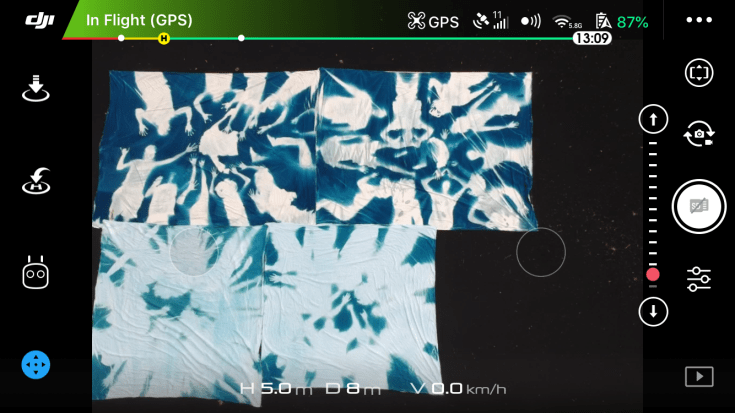
Once they positioned their bodies on the treated fabric, the tent was removed and the fabric was exposed to the light for twenty minutes. It was exceedingly hot that day, our students were very good sports. We took a picture of the exposure using our drone.

Develping_School_Mural
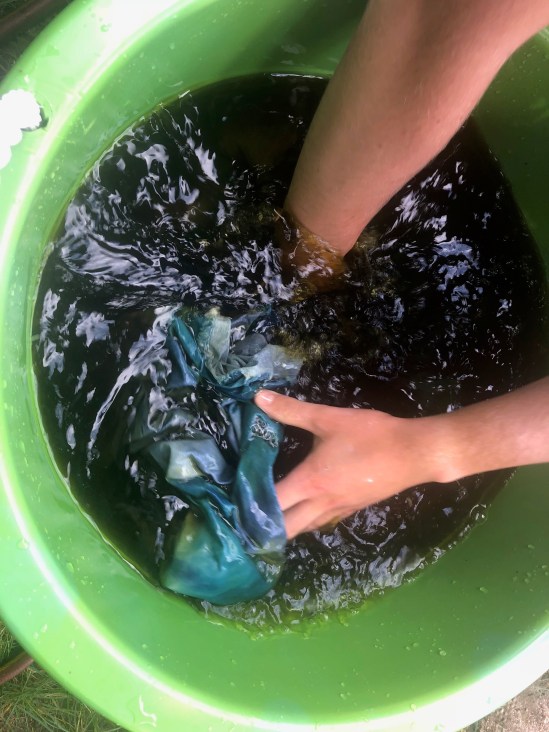
Since the second mural was done on school grounds, the students developed it in a garbage can and a laundry basket using a hose from the auto shop.
School_Mural_Student_Mural
After the murals were compared, the students worked on their own miniature murals.

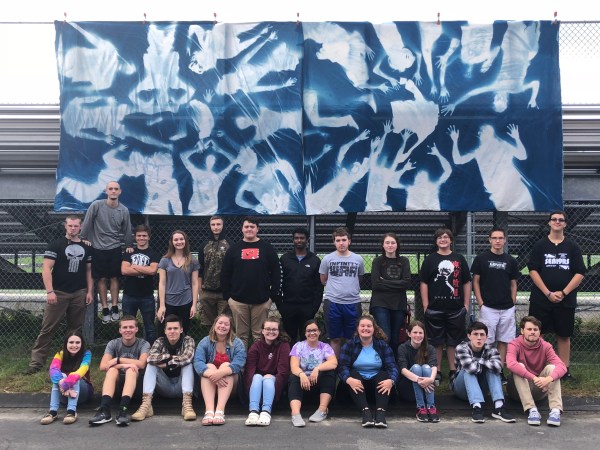
Our students compared murals side by side, comparing and contrasting the differences in highlights, exposure times, colors and composition. They agreed the second version accomplished what they were hoping for – contrast and community composition. They also agreed they work really well together as a team!

School_Mural_Vs_Beach_Mural
top Version 2, bottom Version 1. Image taken using DJI Spark drone.

On Display

Deerfield_Fair
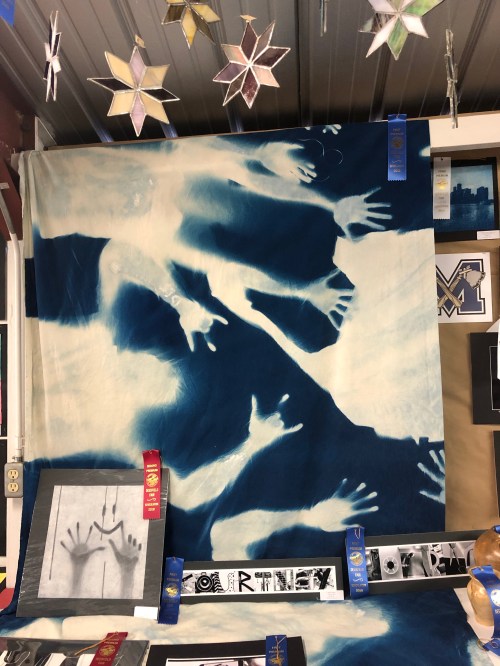
Our second mural was displayed at the 2018 Deerfield Fair,          taking first place.

Final_Mural

Next up… Anthotypes!!!

Odiorne Point State Park – Cyanotype Mural

September 14th, 2018

To introduce our students to the class, we  created a life sized community mural using a process known as cyanotyping.

Potassium ferricyanide + Ferric ammonium citrate + UV Light → Prussian Blue

Prussian Blue + UV Light → German White

German White + Hydrogen peroxide → Prussian Blue

Students learned about the chemistry of the process, how to expose cyanotypes, and practiced developing them using commercially available sun print paper. Once the students had a firm understanding of the process, we took them to Odiorne Point State Park to make a class mural. Our students laid out on the fabric for 20 minutes while we talked about the historic discovery of the chemical process. We watched as the color turned from yellow, to Prussian Blue to German White.


Beach_Mural_Development
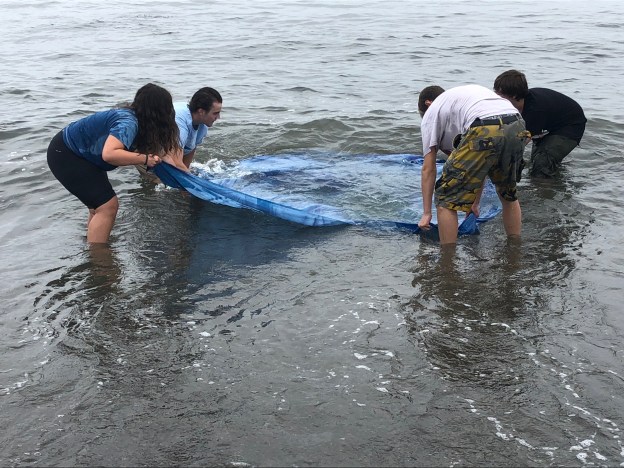
Once the exposure was complete, students took the mural into the ocean to develop it.

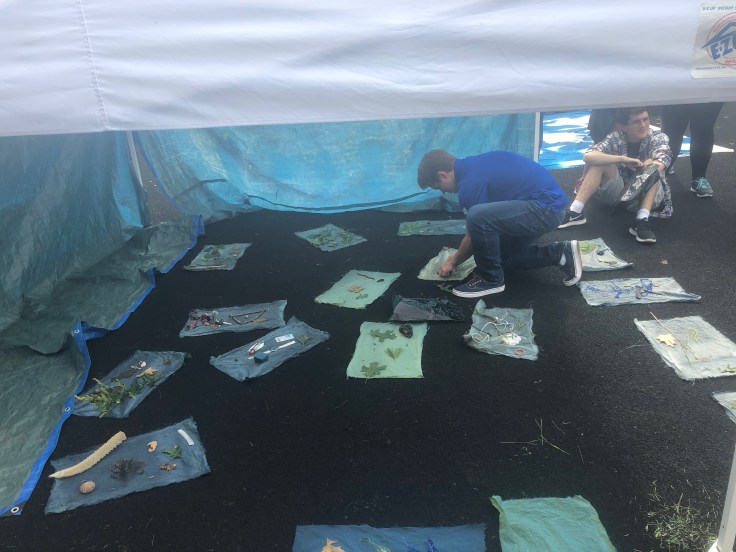
After the two murals were developed and exposed, students created their own murals using items found on and around the beach.

Blog at WordPress.com.

Up ↑

Design a site like this with WordPress.com
Get started